

Civil Engineering
The Department of Civil Engineering offers a comprehensive engineering programme that equips students with knowledge and skills in key areas such as structural, geotechnical, transport, water resources and environmental engineering.
The programme supports theoretical courses with technical training such as laboratory work, field applications and computer-aided design, equipping students with analytical thinking and problem-solving skills. Students have the opportunity to gain professional experience through practical projects and work placements.

General Information
Cyprus Aydın University (CAU)’s Department of Civil Engineering provides a comprehensive undergraduate education focused on current infrastructure development and construction technologies. The curriculum equips students with strong theoretical understanding, hands-on laboratory experience, and engineering design abilities necessary for professional civil engineering practice.
Civil engineering is critical to the planning, design, construction, and maintenance of infrastructure systems such as buildings, bridges, highways, dams, water supply systems, and transportation networks. The curriculum prepares students to serve society in a safe and sustainable manner by teaching them critical thinking, technical competence, and ethics.
Message From The Head of Department
Greetings from the Department of Civil Engineering at Cyprus Aydın University.
Civil engineering is among the oldest and most vital engineering fields, being the foundation of contemporary society. Our department is dedicated to training proficient engineers who can contribute to sustainable development and innovative construction solutions.
The Civil Engineering Department provides a comprehensive array of courses encompassing structural engineering, geotechnical engineering, hydraulics, transportation engineering, construction management, environmental engineering, and materials engineering. Students gain advantages from contemporary laboratories, practical field applications, and computer-aided engineering tools.
Our academic staff consists of experienced scholars dedicated to providing a supportive and challenging learning environment. Through strong cooperation with industry partners and alumni networks, our students gain valuable professional exposure and career development opportunities.
Our objective is to produce engineers who possess technical proficiency, social responsibility, and preparedness to address global engineering challenges.
Yrd. Doç. Dr. Kamyar FULADLU
Program Introduction
The Civil Engineering Undergraduate Program aims to educate engineers capable of planning, designing, analyzing, constructing, and managing civil engineering systems.
The Bachelor’s Degree Program in Civil Engineering is a 240 ECTS credit, 4-year program consisting of eight semesters, each with a 30 ECTS workload. One ECTS corresponds to approximately 25.5 hours of student workload per semester.
The curriculum integrates theoretical instruction, laboratory applications, computer-based analysis, design projects, and field training, ensuring graduates possess both academic knowledge and professional skills.
Purpose and Objectives
The program aims to:
• Provide strong foundations in mathematics, physics, and engineering sciences
• Develop analytical and problem-solving abilities
• Train students in structural, geotechnical, hydraulic, and transportation engineering
• Promote sustainable and environmentally responsible engineering solutions
• Enhance teamwork, communication, and leadership skills
• Prepare graduates for professional practice and postgraduate education
Accreditations
The Department of Civil Engineering has been accredited by the Council of Higher Education (YÖK) and the Higher Education Planning, Supervision, Accreditation and Coordination Council (YÖDAK), demonstrating our commitment to quality and educational standards. These accreditations ensure that our educational content meets national and international standards, that our academic staff are competent, and that the quality of the learning environment we provide for our students is guaranteed. Our university aims to provide students with a reliable, high-quality and reputable academic experience by keeping its teaching and learning activities up to date in line with a philosophy of continuous development.
Career Opportunities
Graduates of the Civil Engineering Program may work in:
• Construction and contracting companies
• Structural design offices
• Transportation and highway departments
• Water resources and environmental agencies
• Municipalities and public institutions
• Consulting and project management firms
Civil Engineering graduates of Cyprus Aydın University will be establishing successful careers in construction, infrastructure, transportation, and water engineering sectors across Europe, Africa, and the Middle East, reflecting the program’s global relevance and strong academic foundation after graduation. The successful graduates are always in contact with the departments in CAU.
Program Qualification Type
Qualification Type
Bachelor of Science (B.Sc.) in Civil Engineering
Program Qualification Type
Course Structure
Basic sciences, core engineering courses, field-specific courses including summer trainings, laboratories, electives, and graduation project.
Course Structure
Course Content, ECTS, and Assessment
The details of all the courses offered by Civil Engineering department can be found by using the following link
Course Content, ECTS, and Assessment
Exam Evaluation Methods
Graduation Requirements
Completion of 240 ECTS credits and successful graduation project.
Graduation Requirements
Learning and Assessment
Learning Outcomes (PLO / CLO)
Graduates apply engineering knowledge, design systems, solve problems, and work ethically.
The Civil Engineering Programme follows an outcomes-based education model in alignment with the Bologna Process and European Higher Education Area (EHEA) standards. Learning outcomes are defined at both Programme Learning Outcome (PLO) and Course Learning Outcome (CLO) levels.
Programme Learning Outcomes are categorized under knowledge, skills, and competences.
Knowledge Outcomes include mathematical foundations, electrical and electronic circuit theory, sustainability, renewable energy concepts, engineering ethics, and management principles.
Skills outcomes include the ability to analyze and design civil engineering structures, conduct laboratory and field experiments, interpret engineering data and prepare technical reports and use of modern engineering software and tools.
Competence Outcomes focus on teamwork, communication skills in English, ethical responsibility, independent learning, project management, and readiness for professional practice or postgraduate studies.
Qualification Matrix
The Qualification Matrix demonstrates the relationship between Programme aims, learning outcomes, and courses. It ensures that each learning outcome is systematically addressed throughout the curriculum.
The matrix maps Programme Learning Outcomes (PLOs) against Programme objectives and courses. Each course contributes to one or more learning outcomes, indicated within the matrix. This structure ensures balanced coverage of theoretical knowledge, practical skills, and professional competences.
The Qualification Matrix supports quality assurance, curriculum coherence, and accreditation requirements by clearly identifying how learning outcomes are achieved across the programme.
Complete course program learning outcomes are available on
Assessment & Examination System
Student performance is evaluated using continuous assessment and final examinations in accordance with university academic regulations.
Assessment methods include:
– Midterm examinations
– Quizzes
– Homework and assignments
– Laboratory experiments and reports
– Projects and presentations
– Final examinations
Each assessment component contributes to the evaluation of Course Learning Outcomes (CLOs), which collectively measure the achievement of Programme Learning Outcomes (PLOs).
Grading, examination schedules, make-up examinations, and evaluation criteria are implemented according to Cyprus Aydın University academic regulations to ensure transparency, fairness, and consistency in student assessment.
Admission Requirements
Applicants to Cyprus Aydın University are required to have completed secondary education or its equivalent. International students must submit a high school diploma, official transcripts, a valid passport copy, and passport-sized photographs. Depending on the chosen program, proof of English language proficiency (such as TOEFL or IELTS) may be required; otherwise, students may enroll in the university’s English Preparatory School.
Some faculties, particularly in health and professional fields, may require additional documentation or placement evaluations. Applications are reviewed based on academic background and program availability.
Admission Requirements for Students with TRNC Citizenship
Admission Requirements for Foreign Students
Admission, Recognition, and Transfers
Cyprus Aydın University accepts student transfers from recognized higher education institutions in accordance with regulations set by the Higher Education Planning, Evaluation, Accreditation and Coordination Council (YÖDAK). Transfer applicants must provide official transcripts and course descriptions for credit evaluation. Previously completed courses are reviewed by the relevant faculty to determine equivalency and credit recognition. The university also recognizes international qualifications from accredited institutions, ensuring fair academic placement and continuity for students continuing their education at CAU.
Cyprus Aydın University Horizontal and Vertical Transfer Guidelines
Students
Students are the key stakeholders in the Electrical and Electronic Engineering Program. They are actively involved in lectures, lab work, design projects, internships, and academic advice. Course evaluations and surveys capture student feedback, which is then systematically used to assist the program’s continuing improvement.
Employees
The academic and administrative staff involved in the implementation of the program play a key role in achieving the institution’s strategic goals.
Faculty members actively participate in curriculum development, updating course content, and strategic planning processes through regularly held “Department Academic Board Meetings.” The professional development of academic staff is supported through “Training of Trainers” programs and scientific research incentives. In addition, employees’ opinions are gathered annually through “Personnel Satisfaction Surveys,” contributing to the improvement of the working environment. University administrative staff provide logistical and bureaucratic support for educational processes.
Graduates
CAU Graduates are contacted via alumni surveys and communication venues. Their professional feedback is utilized to assess the curriculum’s relevancy, measure program educational objectives, and lead continual development initiatives.
Cyprus Aydın University Alumni and Members Association
Cyprus Aydın University Career Center
Employers and Industry Partners
Employers and sectoral partners contribute by providing industrial advice services, supervising internships, giving guest lectures, and collecting feedback. Their participation contributes to curriculum relevance, strengthens industry alignment, and guarantees that graduates meet current professional and technology standards.
Akademik Kadro
Infrastructure and Physical Facilities
The Architecture and Interior Architecture departments operate their studios with a high-quality physical and technological infrastructure. The studio spaces within the faculty have been designed to be suitable for critique sessions, jury assessments and workshop activities, whilst offering flexible usage options.
In addition, computer laboratories, multi-purpose classrooms and communal areas, equipped to facilitate both theoretical lectures and computer-aided design, modelling and visualisation applications, are actively utilised. The educational infrastructure is continuously developed and updated to support the drawing, digital production, research and presentation processes required by the disciplines of architecture, interior architecture and industrial design.


No posts found.
Events
The Civil Engineering Department in Cyprus Aydin University organizes a variety of academic and professional programs targeted at improving student learning and promoting continuous development. These activities include laboratory-based education, senior design and capstone projects, industrial training and internships, technical seminars, workshops, guest lectures by industry specialists, and student club events. The department also fosters research, academic conferences, competitions, and joint initiatives with industry and other universities. These activities encourage students to acquire technical competence, teamwork, communication skills, and professional ethics while remaining in line with current technological advancements and certification criteria.
News and Announcements
The Civil Engineering Department sends out news and releases on a regular basis to keep students and stakeholders up to date on academic activities, seminars, workshops, exams, internships, events, and essential departmental changes. Information is disseminated through the department’s website, formal communication channels, and notice boards. In addition, a monthly faculty newsletter is delivered to students to provide updates on recent accomplishments, ongoing projects, future events, and academic advances, guaranteeing ongoing participation and effective communication throughout the department.
ontact Information
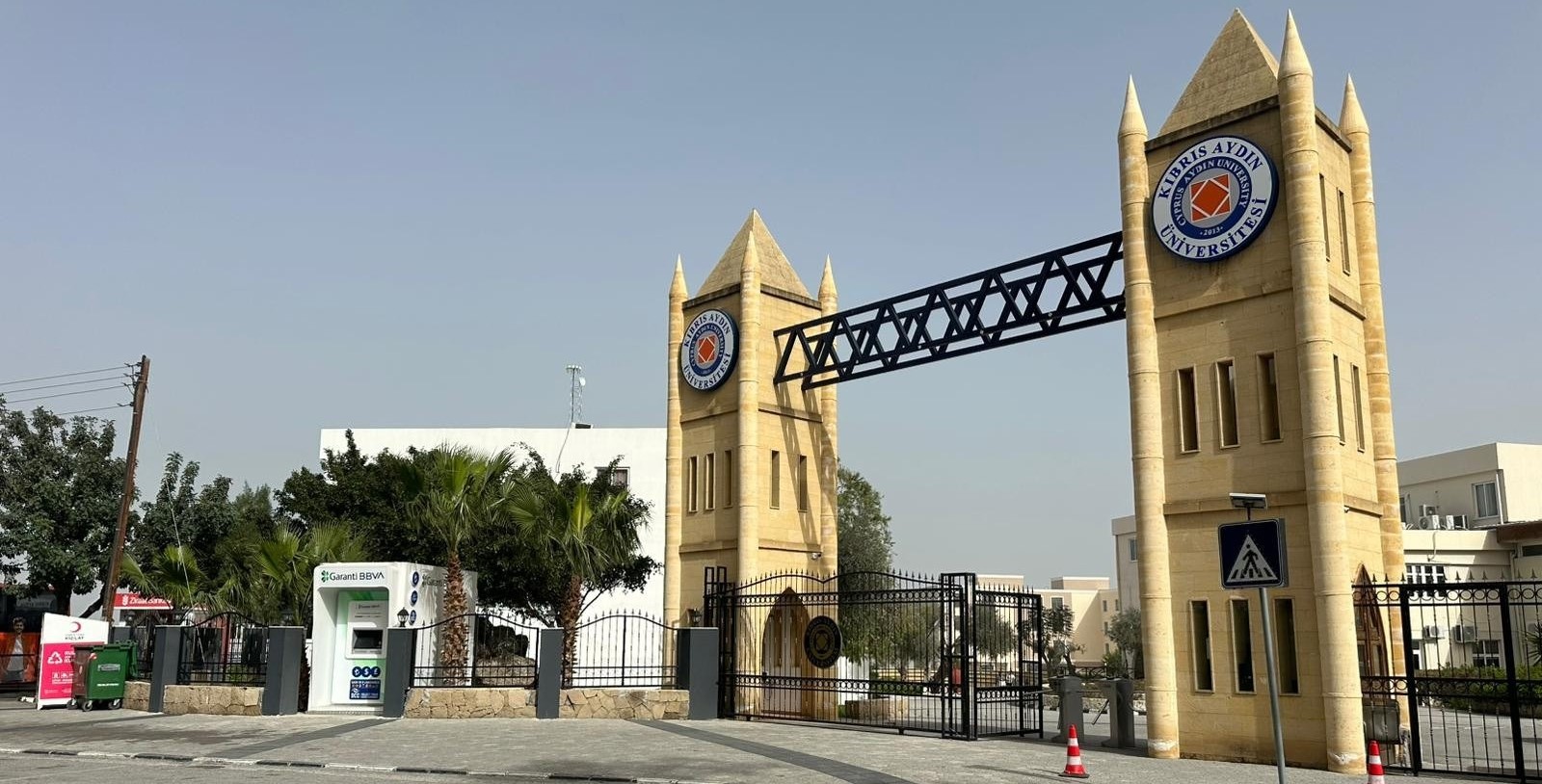
Address: Dr. Fazıl Küçük Caddesi No.80 Ozanköy/Girne Kuzey Kıbrıs
Dean E-mail:[email protected]
Vice Dean E-Mail: [email protected]
Tel: +90 392 650 00 00
Instagram: caucampus
Instagram: cauint
Facebook: Cyprus Aydın University