

Faculty of Educational Sciences
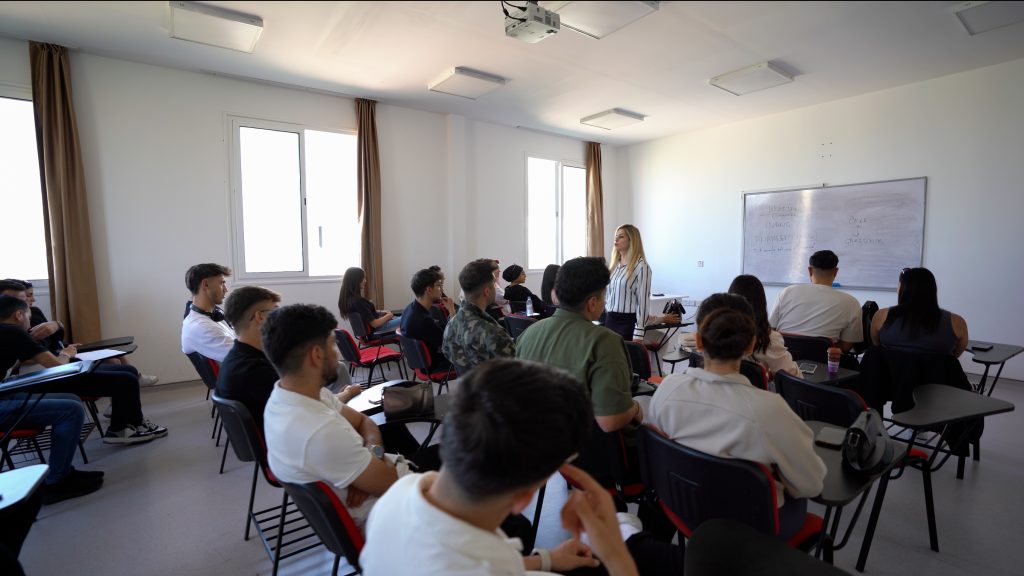
The Faculty of Educational Sciences at Cyprus Aydın University was established with the aim of enhancing teacher quality, which is a key determinant of success in the teaching profession. The faculty aims not only to impart academic knowledge to its students but also to cultivate individuals who think independently, respect human values, and possess a strong sense of technological and social responsibility.
Supported by modern educational approaches and field-based practices, our programs ensure that our students graduate as competent educators proficient in educational technologies, personalized teaching methods, and leadership skills.
Faculty Overview
The Faculty of Education at Cyprus Aydın University was established with the aim of enhancing teacher quality, which is a key determinant of success in the teaching profession. The Faculty aims not only to impart academic knowledge to its students but also to cultivate individuals who think independently, respect human values, and possess a strong sense of technological and social responsibility. Supported by modern educational approaches and field-based practices, our programs ensure that our students graduate as competent educators proficient in educational technologies, personalized teaching methods, and leadership skills.
History
Cyprus Science University is a private institution of higher education established in the Turkish Republic of Northern Cyprus in 2013. The university completed its academic structure in a short period of time, began admitting students in 2014, and has embraced international recognition and a modern approach to education. The Faculty of Educational Sciences operates in line with the university’s founding philosophy, aiming to cultivate qualified human resources in the field of education. The faculty offers programs specifically in teacher education and educational expertise, providing undergraduate education in disciplines such as Guidance and Psychological Counseling, Turkish Language Teaching, and other educational sciences. These programs provide students with opportunities for both theoretical and practical education.
Mission
The vision of the Faculty of Educational Sciences is to be a pioneering faculty that cultivates educators and educational science specialists who adopt a contemporary understanding of education, are capable of addressing the individual’s academic, social, emotional, and ethical development through a holistic approach, possess a high capacity for generating and applying scientific knowledge, and have a strong sense of social responsibility. The faculty aims to cultivate individuals who closely follow national and international developments in the field of education and possess an innovative, critical, and solution-oriented perspective. In line with this vision, the faculty adopts an educational philosophy that integrates theoretical knowledge with practice, is research-based, student-centered, and supports lifelong learning. Equipping students with the necessary pedagogical knowledge, professional skills, ethical sensitivity, and digital competencies in the fields of teaching and educational sciences is among the faculty’s top priorities. The faculty aims to prepare students to become professionals who can work effectively in educational environments that respect individual differences and are inclusive and multicultural. The Faculty of Educational Sciences embraces a structure that conducts scientific research aimed at enhancing educational quality, encourages interdisciplinary collaboration, and contributes academically to educational policies. Additionally, through strong partnerships with practice schools, counseling centers, and relevant institutions, it supports students in gaining professional experience.
Vision
The faculty’s vision is to be a respected and preferred institution in the field of educational sciences at both the national and international levels, committed to sustainable development, that cultivates educators who add value to the education system, contribute to social progress, adhere to ethical principles, and possess leadership qualities.
Purpose and Scope
The Faculty of Education at Cyprus Aydın University was established with the aim of enhancing teacher quality, which is a key determinant of success in the teaching profession. The Faculty aims not only to impart academic knowledge to its students but also to cultivate individuals who think independently, respect human values, and possess a strong sense of technological and social responsibility.
The Faculty in Numbers
| Category | Title | Number |
| Number of Students | Undergraduate Student | 31 |
| Associate Professor | 1 | |
| Assistant Professor | 2 | |
| Total Full-Time Faculty | 6 | |
| Academic Staff (Part-Time) | Instructor | 1 |
| Total Academic Staff | 7 |
Message from the Dean
Dear Students,
Welcome to the family of the Faculty of Educational Sciences at Cyprus Aydın University. We are delighted and excited to have you here. Our goal is not merely to train teachers or psychological counselors, but to nurture individuals who think critically, ask questions, create value, and make a difference in society.
Through our strong programs—such as Turkish Language Teaching, Guidance and Psychological Counseling, and English Language Teaching—we offer a contemporary education that blends theory with practice. Throughout your educational journey, we aim to equip you not only with professional knowledge but also with a love for humanity, ethical sensitivity, and lifelong learning skills.
With our faculty of experts in their respective fields, we are proud to offer you a productive and inspiring learning environment that supports your personal growth. Remember, you are the beacons of hope for the future. Every step you take on this journey will breathe new life into the world of education.
We invite you to visit our campus to get to know our faculty better, and I wish you a university life filled with success.
With respect and affection,
Prof. Dr. Ömer Üre
International Partnerships
Aydın University of Cyprus places great importance on developing strategic partnerships on a global scale, in line with its goal of becoming an internationally recognized institution of higher education. The University aims to play an active role in global academic networks by offering high-quality international collaboration opportunities to its academic staff, researchers, students, and external stakeholders.
The educational and institutional partnerships carried out within this framework focus on areas such as establishing joint research programs, developing student and faculty exchange programs, supporting cultural and academic exchange activities, and organizing international summer schools. Through these partnerships, Cyprus Aydın University aims to enhance academic quality, enrich international learning experiences, and contribute to scientific advancement on a global scale.
| COUNTRY | UNIVERSITY NAME |
| Türkiye | İstanbul Aydın Üniversitesi |
| Türkiye | İstanbul Gedik Üniversitesi |
| Türkiye | Kastamonu Üniversitesi |
| Türkiye | Niğde Ömer Halisdemir Üniversitesi |
| Türkiye | Selçuk Üniversitesi |
| Afganistan | Cihan Sağlık Bilimleri Enstitüsü |
| Azerbaycan | Hazar Üniversitesi |
| Azerbaycan | Nahçıvan Üniversitesi |
| Azerbaycan | Sumgayıt Devlet Üniversitesi |
| Bangladeş | Daffodil Uluslararası Üniversitesi |
| Bosna-Hersek | CEPS Üniversite Koleji – İşletme Çalışmaları Merkezi |
| Brezilya | Juiz de Fora Federal Üniversitesi |
| Brezilya | Brezilya Üniversiteleri Uluslararası İş Birliği Grubu |
| Bulgaristan | Telekomünikasyon ve Posta Üniversitesi |
| Çin | Doğu Çin Teknoloji Üniversitesi |
| Hırvatistan | Zagreb Ekonomi ve Yönetim Okulu |
| Fransa | IPAG İşletme Okulu |
| Gürcistan | Gürcistan Havacılık Üniversitesi |
| Gürcistan | Gürcistan Ulusal Üniversitesi |
| Hindistan | Chandigarh Kolejler Grubu |
| Hindistan | JIS Üniversitesi |
| Hindistan | Karpagam Yükseköğretim Akademisi |
| Hindistan | Lovely Profesyonel Üniversitesi |
| Endonezya | Uluslararası Turizm ve İşletme Enstitüsü & Bali Otelcilik Okulu |
| Endonezya | Diponegoro Üniversitesi |
| Endonezya | Syiah Kuala Üniversitesi |
| İran | Kuzeybatı Uluslararası Üniversitesi |
| Irak | El-Mustakbel Üniversitesi |
| İtalya | Roma Uluslararası Çalışmalar Üniversitesi |
| Ürdün | Orta Doğu Üniversitesi |
| Kazakistan | Astana Bilişim Teknolojileri Üniversitesi |
| Kazakistan | Yessenov Üniversitesi |
| Kazakistan | Almatı Yönetim Üniversitesi |
| Kenya | Limpopo Üniversitesi |
| Kosova | Universum Koleji |
| Kırgızistan | Bişkek Devlet Üniversitesi |
| Libya | Zaviye Üniversitesi |
| Malezya | INTI Uluslararası Üniversitesi |
| Malezya | Yönetim ve Bilim Üniversitesi |
| Malezya | Malezya Pahang Üniversitesi |
| Malezya | Malezya Bilim Üniversitesi |
| Malta | Pegaso Uluslararası Üniversitesi |
| Malta | Malta İşletme Okulu |
| Moldova | Comrat Devlet Üniversitesi |
| Moldova | Moldova Teknik Üniversitesi |
| Norveç | Oslo Metropolitan Üniversitesi |
| Pakistan | Gift Üniversitesi |
| Pakistan | İşletme Yönetimi Enstitüsü |
| Pakistan | Karaçi Ekonomi ve Teknoloji Enstitüsü (KIET) |
| Pakistan | Superior Üniversitesi |
| Pakistan | Faisalabad Üniversitesi |
| Pakistan | Sialkot Üniversitesi |
| Filistin | An-Najah Ulusal Üniversitesi |
| Filistin | Arap Amerikan Üniversitesi |
| Filistin | El-Halil Üniversitesi |
| Filipinler | Nueva Caceres Üniversitesi |
| Polonya | Josef Goluchowski Uygulamalı Bilimler Üniversitesi |
| Romanya | Dimitrie Cantemir Hristiyan Üniversitesi |
| Romanya | Craiova Üniversitesi |
| Güney Kore | Woosong Üniversitesi |
| Güney Kore | Kyungdong Üniversitesi |
| İspanya | ENAE İşletme Okulu – İşletme ve Yönetim Okulu |
| Tacikistan | Uluslararası Turizm ve Girişimcilik Üniversitesi |
| Birleşik Arap Emirlikleri | Ajman Üniversitesi |
| Amerika Birleşik Devletleri | Virscend Üniversitesi |
| Amerika Birleşik Devletleri | Johns Hopkins Üniversitesi |
| Amerika Birleşik Devletleri | Rockland Toplum Koleji |
| Amerika Birleşik Devletleri | Orta Missouri Üniversitesi |
| Özbekistan | Asya Uluslararası Üniversitesi |
| Özbekistan | Semerkant Uluslararası Teknoloji Üniversitesi |
| Özbekistan | Taşkent Devlet Ulaştırma Üniversitesi |
| Özbekistan | Taşkent Devlet Ekonomi Üniversitesi |
| Özbekistan | Uluslararası Finans, Teknoloji ve Bilim Okulu |
Management Structure
Boards and Commissions
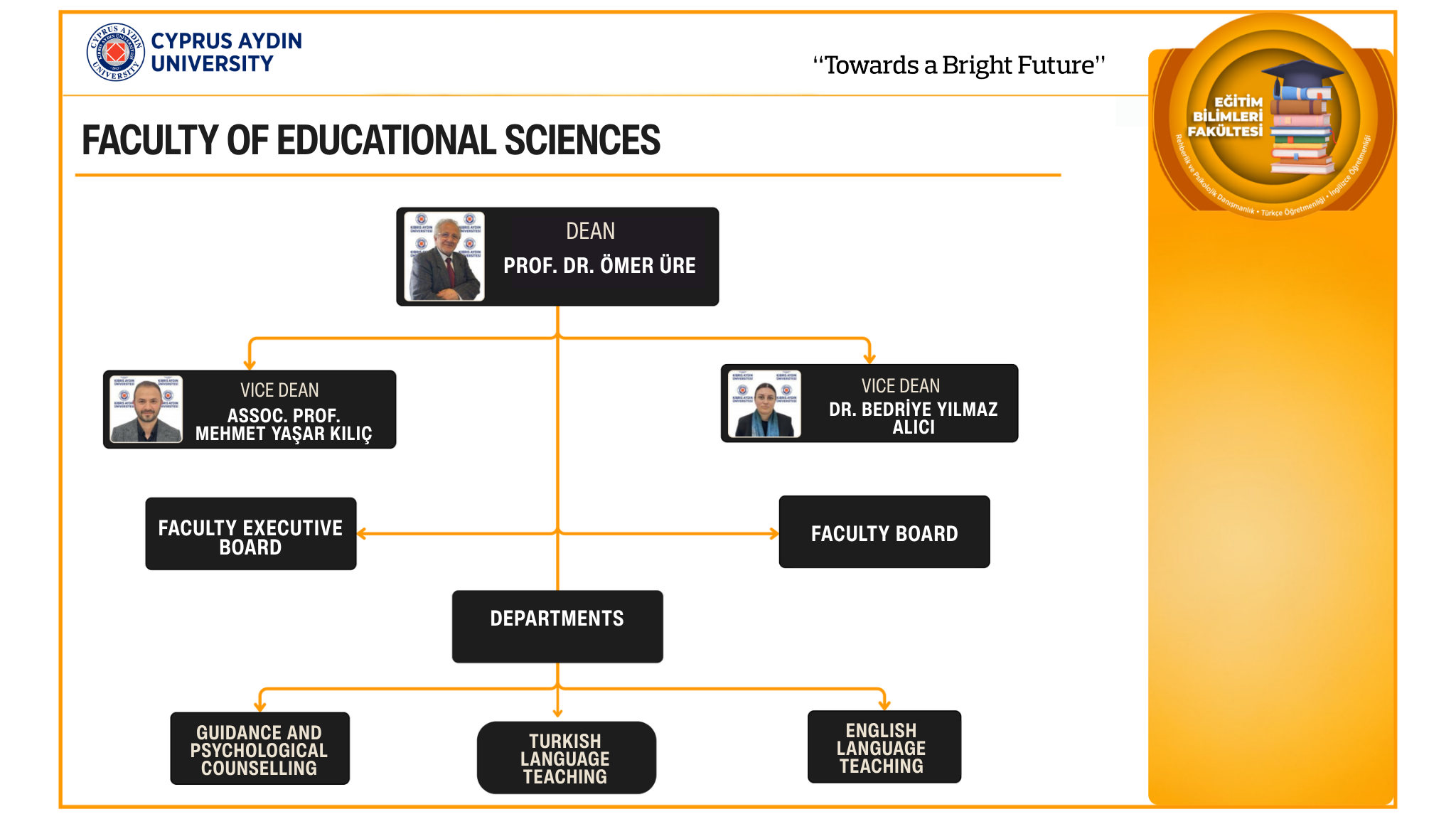
The Faculty Council consists of the deans of the departments affiliated with the faculty, the directors of any institutes and colleges affiliated with the faculty, and three faculty members elected by the professors, two by the associate professors, and one by the assistant professors from among their own ranks for a term of three years.
The Faculty Council holds its regular meetings at the beginning and end of each semester.
The dean may convene the Faculty Council as deemed necessary.
Duties:
The Faculty Council is an academic body that performs the following duties:
To determine the faculty’s educational, scientific research, and publication activities, as well as the principles, plans, programs, and academic calendar related to these activities.
To elect members of the Faculty Executive Board.
To perform other duties assigned by laws and regulations.
Faculty Executive Board
The Faculty Executive Board consists of the dean as chair, three professors, two associate professors, and one assistant professor elected by the Faculty Council for a three-year term.
The Faculty Executive Board convenes upon the dean’s call. The Executive Board may establish temporary working groups and education and teaching
coordinators as deemed necessary and define their responsibilities.
Duties:
The Faculty Board of Administration is a body that assists the dean in administrative matters and performs the following duties:
To assist the dean in implementing the principles established by the Faculty Council.
To ensure the implementation of the faculty’s education and teaching plans and programs, as well as the academic calendar.
To prepare the faculty’s investment, program, and budget proposals.
To make decisions on all matters related to faculty administration brought forward by the dean.
To make decisions regarding student admissions, course transfers, and dismissals, as well as matters related to education, teaching, and examinations.
To perform other duties assigned by laws and regulations.
| Faculty Executive Board | Prof. Dr. Ömer ÜRE | Dean / Chair |
| Assistant Prof. Dr. Bedriye Yılmaz ALICI | Assistant Professor Representative / Member | |
| Assoc. Prof. Mehmet Yaşar KILIÇ | Professor Representative / Member | |
| Prof. Dr. Sevil ALBAYRAK | Professor Representative / Member | |
| Prof. Dr. Mehmet Zeki AVCI | Professor Representative / Member | |
| Prof. Dr. Hikmet Şelli AYBAR | Professor Representative / Member | |
| Assoc. Dr. Hatice İMAMOĞLU | Associate Professor Representative / Member | |
| Assoc. Dr. Ayşe Gözde İYİCİL | Associate Professor Representative / Member | |
| Assistant Prof. Dr. Ahmet Munir ACUNER | Assistant Professor Representative / Member | |
| Faculty Board | Prof. Dr. Ömer ÜRE | Dean / Chair |
| Assistant Prof. Dr. Bedriye Yılmaz ALICI | Assistant Professor Representative / Member | |
| Assoc. Prof. Mehmet Yaşar KILIÇ | Professor Representative / Member | |
| Prof. Dr. Sevil ALBAYRAK | Professor Representative / Member | |
| Prof. Dr. Mehmet Zeki AVCI | Professor Representative / Member | |
| Prof. Dr. Hikmet Şelli AYBAR | Professor Representative / Member | |
| Assoc. Dr. Ayşe Gözde İYİCİL | Associate Professor Representative / Member | |
| Prof. Dr. Hikmet Şelli AYBAR | Professor Representative / Member |
Programmes
| Programme Name | Degree | Language of Instruction | Accreditation |
|---|---|---|---|
| Guidance and Psychological Counselling | Bachelor’s degree | Turkish | YÖK,YÖDAK |
| Turkish Language Teaching | Bachelor’s degree | Turkish | YÖK,YÖDAK |
| English Language Teaching | Bachelor’s degree | English | YÖDAK |
Student Handbook
Student Support Services
The Faculty of Dentistry’s Student Support Services aim to support students’ academic, clinical and personal development through a holistic approach. Academic advisory services provide guidance on coursework, examinations and career planning. During clinical placements, students receive guidance and feedback to help them develop their professional skills. Psychological counselling and guidance services support students’ mental well-being. Furthermore, social, cultural and sporting activities are encouraged to help students adapt to university life and strengthen their sense of belonging.
- Student Affairs
- Sports Grounds and Sports Facilities:
- Details of the open-air event and sports areas located within the Cyprus Aydın University campus are provided below.
• Open-air sports and events area: 550 m²
• Volleyball/Basketball/Mini-football pitch: 250 m²
• Fitness Center: 100 m²
• Mini Golf Course: 200 m²
Information regarding the open-air event and sports areas located within the Arapköy campus of Cyprus Aydın University is as follows:
• Walking paths: 600 m²
• Seating area: 300 m² - Feedback and Support Centre Link
- Workplace Training / Work Placement
- Academic Guidance:
Every student who enrols at our university is assigned an academic advisor to provide guidance throughout their academic career. You can view details of your academic advisor via the CAU360 system.
Your academic advisor will assist you with the following:
● Provides basic information about the programme you have enrolled in.
● Informs you about regulations and guidelines, and helps you understand your rights and responsibilities.
● Monitors your academic processes, including course registration and your graduation status.
● Monitors your academic progress and development, providing guidance where necessary.
● Checks that your course selection and re-registration procedures comply with relevant regulations.
● It provides guidance on academic procedures such as credit transfer, exemptions and equivalence.
● It monitors your repeat courses and checks your registration status.
● It approves your course selections via the CAU360 system before the term begins, or informs you of any discrepancies and ensures you make the necessary adjustments.
● Informs you about scholarships, internship opportunities and other opportunities offered by the university.
● Refers you to the Student Health Centre for health-related issues and to the Psychological Counselling and Guidance Centre for psychological support needs.
● Refers students seeking information on exchange programmes (Erasmus, Farabi, etc.) to the relevant coordination offices.
● It directs those seeking information on double degree, minor, and horizontal/vertical transfer options to the relevant department heads.
● It provides guidance on career planning and, if necessary, directs students to the Career Centre. - Academic Calendar
Student Clubs
Double Degree / Minor Programmes
Exchange Programmes
Postgraduate Programmes
Alumni Network
Our Alumni and Members Association and Career Centre, operating under the umbrella of our university, provide guidance and support to our students.
Cyprus Aydın University Alumni and Members Association
Career Guidance
Our Alumni and Members Association and Career Centre, operating under the umbrella of our university, provide guidance and support to our students.
Quality Policy
The Faculty of Education regards quality assurance in higher education as a key determinant of institutional sustainability and academic prestige; it is committed to conducting its activities in education and teaching, research, and social contribution as an integrated whole, in accordance with a systematic and knowledge-based approach to quality.
In line with its objectives, our Faculty approaches the responsibility of teacher training not merely as a process of professional development, but within the framework of the goal of cultivating individuals who are capable of critical thinking, possess ethical values, have developed scientific research literacy, and demonstrate a high sense of social responsibility.
As the Faculty of Education at Cyprus Aydın University:
· We regularly analyse the alignment of our education programmes with the Turkish Higher Education Qualifications Framework (TYYÇ) at both national and international levels,
· Ensure the structural consistency between programme outcomes, learning outcomes, and assessment processes,
· Develop student-centred, research-based, evidence-based, and reflective learning practices,
· Involve all internal and external stakeholders in decision-making processes through systematic feedback mechanisms,
· To establish a culture of monitoring, evaluation and reporting based on performance indicators across all administrative and academic processes,
· To sustain the Plan-Do-Check-Act (PDCA) cycle within a framework of continuous improvement,
It has adopted these as its priority strategic objectives.
In line with this policy, the Faculty of Education bases its teacher training approach on a holistic consideration of pedagogy, subject knowledge and professional ethical principles; it aims to train experts who can develop a critical pedagogical awareness, analyse evolving and revised education policies, and contribute to social transformation and development. Our Faculty aims for a strategic vision centred on becoming an educational institution that produces and sustains quality, and is a leader and benchmark in academic productivity.
Cyprus Aydın University Quality Coordination Unit
Quality Assurance Processes
Our faculty’s quality assurance system is based on the planning, implementation, monitoring, and continuous improvement of teaching and learning, research, and community engagement activities. In line with this, our quality improvement processes are conducted in accordance with the following fundamental principles:
Learning-Centred Approach:
Academic programmes are designed to enhance student learning outcomes, professional competencies and graduates’ employability; learning processes are structured around an outcomes-based agreement.
Continuous Improvement and Monitoring:
In conjunction with feedback from students, academic staff and institutional representatives; the curriculum, teaching methods and administrative institutional procedures are continuously and sustainably evaluated; and updated based on the PDCA cycle.
Strengthening Academic Professional Competence:
Taking into account the changing and evolving needs of education and teaching, the aim is to enhance quality in academic activities and all forms of engagement; the professional development, progression and research capacity of teaching staff are supported.
Stakeholder Participation and Collaboration:
The active participation of internal and external stakeholders in quality assurance processes is ensured; collaboration mechanisms with graduates and representatives of relevant institutions are being developed
Strategic Quality Management
Quality initiatives within the Faculty are carried out in alignment with the University’s strategic planning and quality coordination unit, and are monitored using performance indicators.
Within the framework outlined above, our faculty maintains its quality assurance processes not merely as an administrative duty, but as part of a dynamic management approach that supports institutional development and progress, enhances academic effectiveness, and strengthens social contribution.
Surveys and Feedback Mechanisms
Faculty Self-Evaluation Report
Self-evaluation documentation is prepared by the Faculty in line with institutional quality cycles. The reports present performance indicators, identified strengths, areas for improvement, and planned actions, supported by relevant evidence.
Accreditations
All of our university’s programmes and departments have been accredited by the Council of Higher Education (YÖK) and the Council for Higher Education Planning, Supervision, Accreditation and Coordination (YÖDAK), demonstrating the importance we place on quality and educational standards. These accreditations ensure that our educational content meets national and international standards, that our academic staff are competent, and that the quality of the learning environment we provide for our students is guaranteed. Our university aims to provide students with a reliable, high-quality and reputable academic experience by keeping its teaching and learning activities up to date through a commitment to continuous improvement.
Research Areas and Groups
Research activities within the Faculty are conducted in the fields of Turkish Language Education, Guidance and Psychological Counselling (GPC), and English Language Education. Within this scope, emphasis is placed on language teaching and language skills, teacher education, educational technologies, psychological counselling and guidance, individual and social development, foreign language teaching, and interdisciplinary educational research. The development of scientific studies at national and international levels is supported through academic collaborations and research groups
Research Projects
Publications
| TITLE | NAME-SURNAME | PUBLICATION DATE | INDEX | PUBLICATION TITLE |
| Prof. Dr. | Ömer ÜRE | 2025 | Anı Publishing | Book: Gür, Ç. & Eser, B. (Eds.). (2025) .Current Approaches in the Field of Well-being: POSWEB Congress 2025 Abstract Book. Anı Publishing. |
| Turkish Association of Psychological Counselling and Guidance | Report: PDR-EPDAB (2025). National Standards for Career Counselling Practices. Turkish Association of Psychological Counselling and Guidance. file:///C:/Users/SuperComputers/Downloads/Career-Psychological-Counselling-Practices-Course-Standards-Version-1.0-02.02.2026%20(1).pdf. | |||
| Prof. Dr. | Aslı B. SÖKMEZ | 2025 | SSCI (Q1) | ARTICLE: Core facets of divine forgiveness: a study across monotheistic religions |
| 2025 | NOBEL Life | BOOK: Forgiveness
The Art of Forgiving Oneself and Others |
||
| Assoc. Prof. Dr. | Bedriye Y. ALICI | 2026 | SSCI (Q1) | ARTICLE: Family influence and well-being in adolescents: a test of the career construction model of adaptation |
| 2025 | TR | ARTICLE: Psychological Resilience, Life Satisfaction and Perceived Stress | ||
| Ebscohost
Sobiad Erih Plus Scilit |
ARTICLE: An Examination of Life Satisfaction in Terms of Locus of Control and Certain Variables: The Case of Northern Cyprus | |||
| 2025 | TR | ARTICLE: An Examination of Anxiety and Aggression Levels in Preschool Children in Terms of Parental Attitudes | ||
| Assoc. Prof. Dr. | Mehmet Y. KILIÇ | 2026 | SSCI | ARTICLE: The Mediating Role of Internationalisation in Higher Education in the Relationship Between Cultural Intelligence and Intercultural Sensitivity. |
| Prof. Dr. | Tokay GEDİKOĞLU | 2026 | SSCI | ARTICLE: The Mediating Role of Internationalisation in Higher Education in the Relationship Between Cultural Intelligence and Intercultural Sensitivity. |
| Prof. Dr. | Tokay GEDİKOĞLU | 2026 | SSCI | ARTICLE: The Mediating Role of Internationalisation in Higher Education in the Relationship Between Cultural Intelligence and Intercultural Sensitivity. |
| Assoc. Prof. Dr | Ahmet M. ACUNER | 2025 | SSCI | ARTICLE: The Role of Service Quality in Enhancing Technological Innovation, Satisfaction, and Loyalty Among University Students in Northern Cyprus |
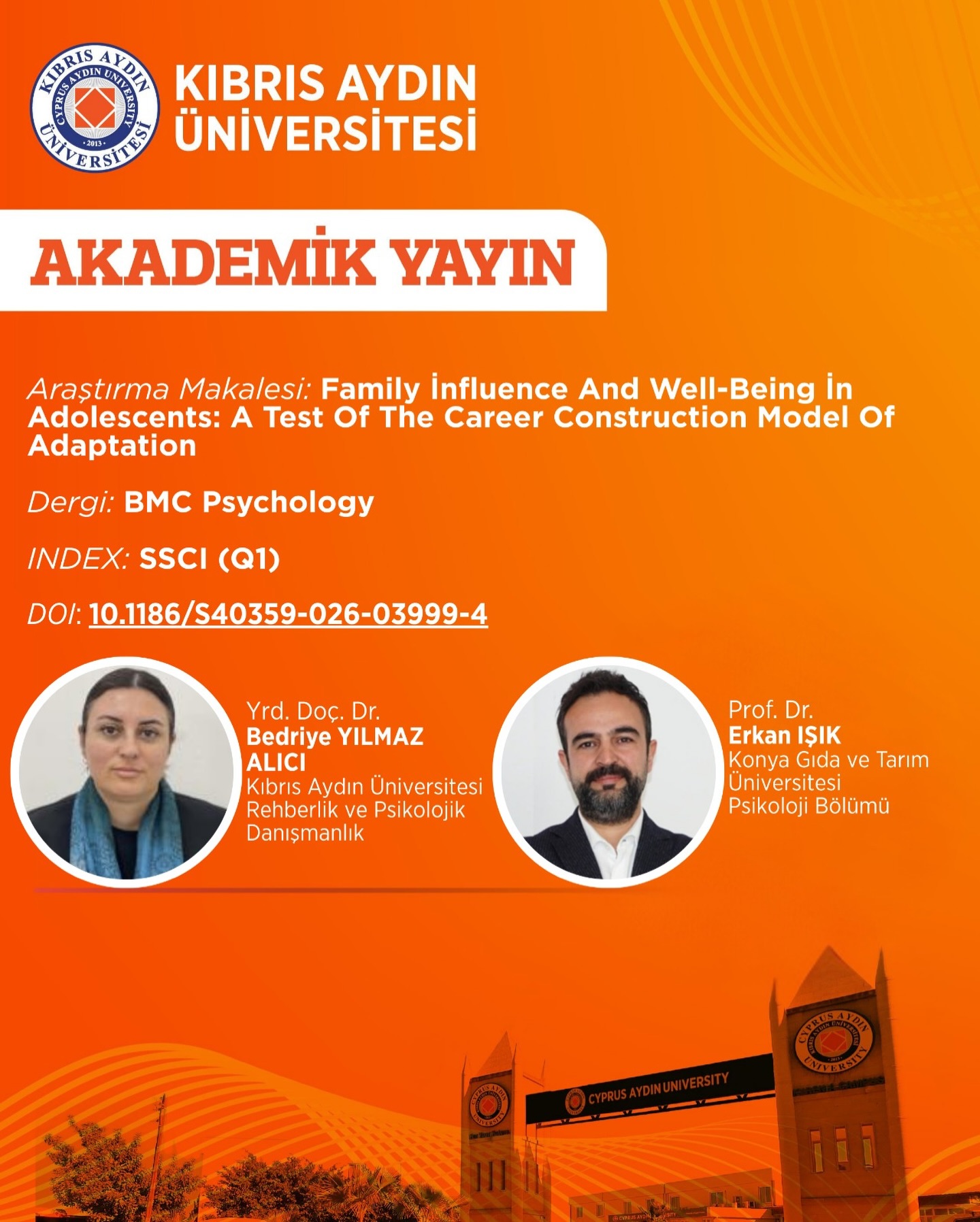
- An article co-authored by Assoc. Prof. Dr. Bedriye YILMAZ ALICI, Head of the RPD Department, and Prof. Dr. Erkan IŞIK has been published in BMC Psychology, a Q1 journal indexed in SSCI.
- An article co-authored by Prof. Dr. Tokay GEDİKOĞLU and Assoc. Prof. Dr. Mehmet Y. KILIÇ from the Faculty of Educational Sciences, along with Aşkın YÜCEKAYALAR, a PhD student in Educational Management, has been published in the SSCI-indexed journal Sustainability.
- An article co-authored by Dr Ahmet M. ACUNER, a member of the Faculty of Educational Sciences, and Birgül GÜRBÜZER, a PhD student in Educational Management, has been published in the SSCI-indexed journal *Sustainability*.
Congresses, Symposia and Presentations
Yılmaz Alıcı, B., & Koltan Memili, T. (2025, 13 Mayıs). Yaşam doyumunun duygusal zekâ ve sosyo-demografik değişkenler açısından incelenmesi [Tam metin bildiri]. 3rd International Positive Schools and Well-Being Congress.
Kılıç, M. Y., & İmamoğlu, H. (2025, 17–19 Ekim). The impact of education on economic growth: Panel data evidence [Bildiri]. 14th International Conference on Economics and Social Sciences (E&SS 2025b), Balıkesir University, Burhaniye, Balıkesir, Türkiye.
Kılıç, M. Y. (2025, 30 Haziran–2 Temmuz). The effect of education index on environmental degradation: Empirical evidence from dynamic panel data analysis for developed and developing countries [Bildiri sunumu]. 13th International Conference on Economics & Social Sciences (E&SS 2025), Arkin University of Creative Arts and Design (ARUCAD), Girne, KKTC.
Research and Publications Portal
Infrastructure and Physical Facilities
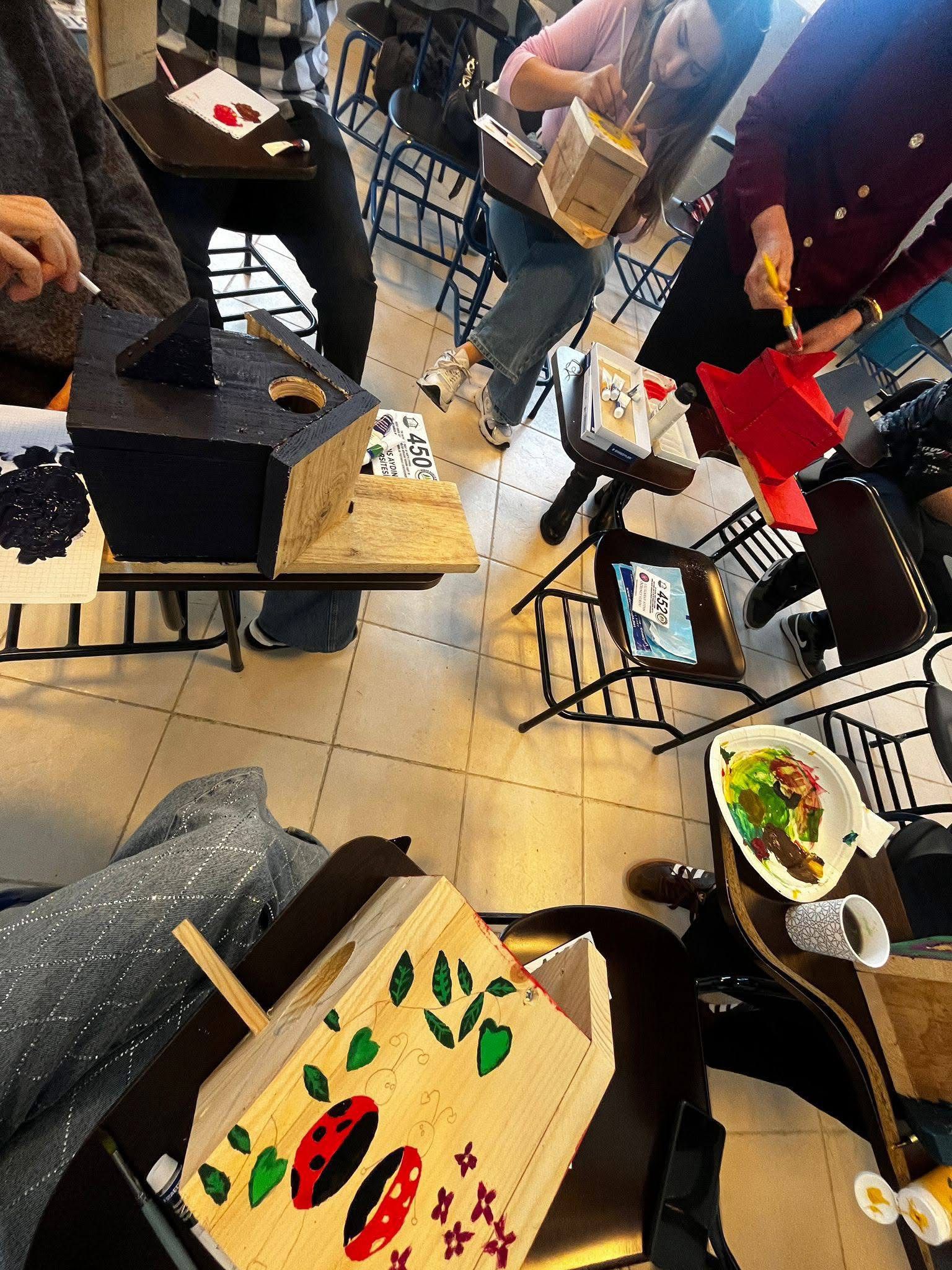
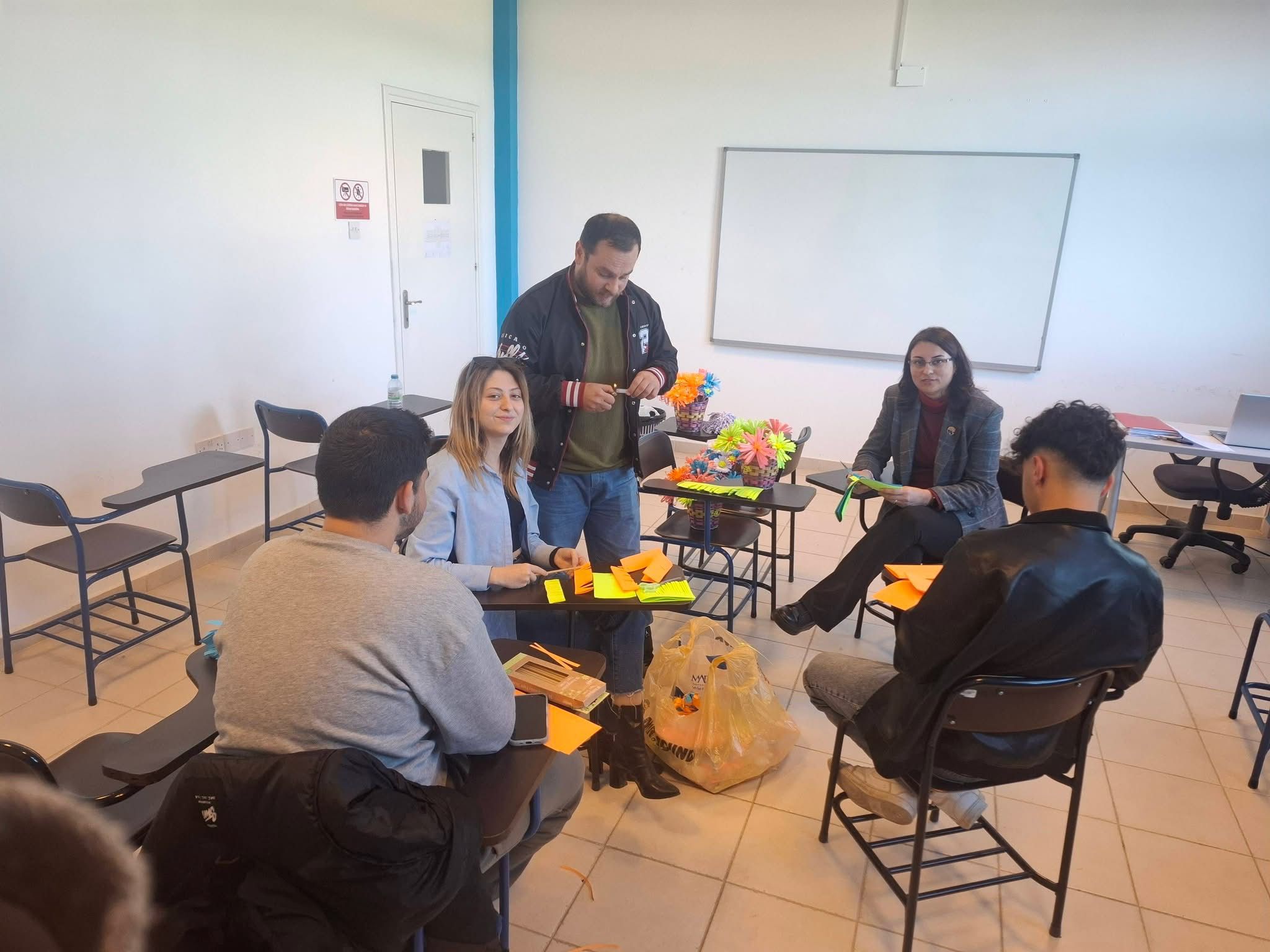
The Faculty of Educational Sciences is a key unit within the university that supports students’ academic and professional development through its modern infrastructure and extensive physical facilities. The faculty features classrooms equipped with state-of-the-art technology, including smartboards and projection systems, as well as laboratories specially designed for practical training (such as counselling and guidance practice rooms). In addition, the library, with its extensive and up-to-date resources, contributes to students’ research and learning processes. The seminar halls and conference areas located on campus host academic events, whilst social spaces and study rooms enable students to carry out both individual and group work efficiently. This infrastructure and physical facilities make a significant contribution to the training of qualified teachers and specialists in the field of educational sciences.

News & Announcements
News and Announcements

Frequently Asked Questions (FAQ)
Our faculty offers three undergraduate programs: Guidance and Psychological Counseling (GPC), Turkish Language Teaching, and English Language Teaching. Our programs aim to educate qualified teachers and specialists in line with contemporary approaches to education.
All of our undergraduate programs last 4 years (8 semesters).
The language of instruction in the Guidance and Psychological Counseling and Turkish Language Teaching programs is Turkish.
Courses in the English Language Teaching program are predominantly conducted in English.
The university’s foreign language proficiency criteria apply to students enrolled in the English Language Teaching program. A preparatory program may be required when deemed necessary.
Teaching practice and school experience courses are carried out in the 4th year. Our students actively engage in field practice during their final year.
Our faculty does not have permanently designated partner schools. Teaching practice is carried out at schools determined in coordination with the relevant official authorities and in accordance with applicable regulations.
Yes. Our programs include practical courses such as field practice, teaching methods, microteaching practices, and teaching practice.
Yes. Our teacher education programs include pedagogical formation courses within the undergraduate curriculum. Our graduates complete their studies having acquired the required teaching competencies.
Double major and minor opportunities are carried out in accordance with the relevant university regulations. Students who meet the academic achievement requirements may apply.
Our programs operate on a semester-based system. The academic year consists of two semesters: fall and spring.
Graduates of Guidance and Psychological Counseling (GPC):
• Psychological counselor in public and private schools
• School counselor
• Counseling and guidance centers
Graduates of Turkish Language Teaching:
• Turkish language teacher in public and private schools
• Courses and study centers
• Educational material development
Graduates of English Language Teaching:
• English language teacher in public and private schools
• Language courses
• International educational institutions
Applications from international students are evaluated in accordance with the admission criteria determined by the university. Application requirements and required documents are announced by the university’s International Office.
Student admission is carried out in accordance with the higher education regulations of the relevant countries and the placement principles determined by the university.
Our university offers preference scholarships, academic achievement scholarships, and various support scholarships. The continuation of scholarships depends on the academic achievement and disciplinary requirements specified in the university’s scholarship regulations.
Yes. Each student is assigned an academic advisor, and students’ academic progress is monitored by their advisors.
Exchange programs are available as part of our university’s internationalization policy. Students may apply to these programs if they meet the specified criteria.
Our graduates may apply to master’s and doctoral programs in relevant fields. Admission requirements are evaluated according to the criteria determined by the relevant graduate institutes.
Contact Information
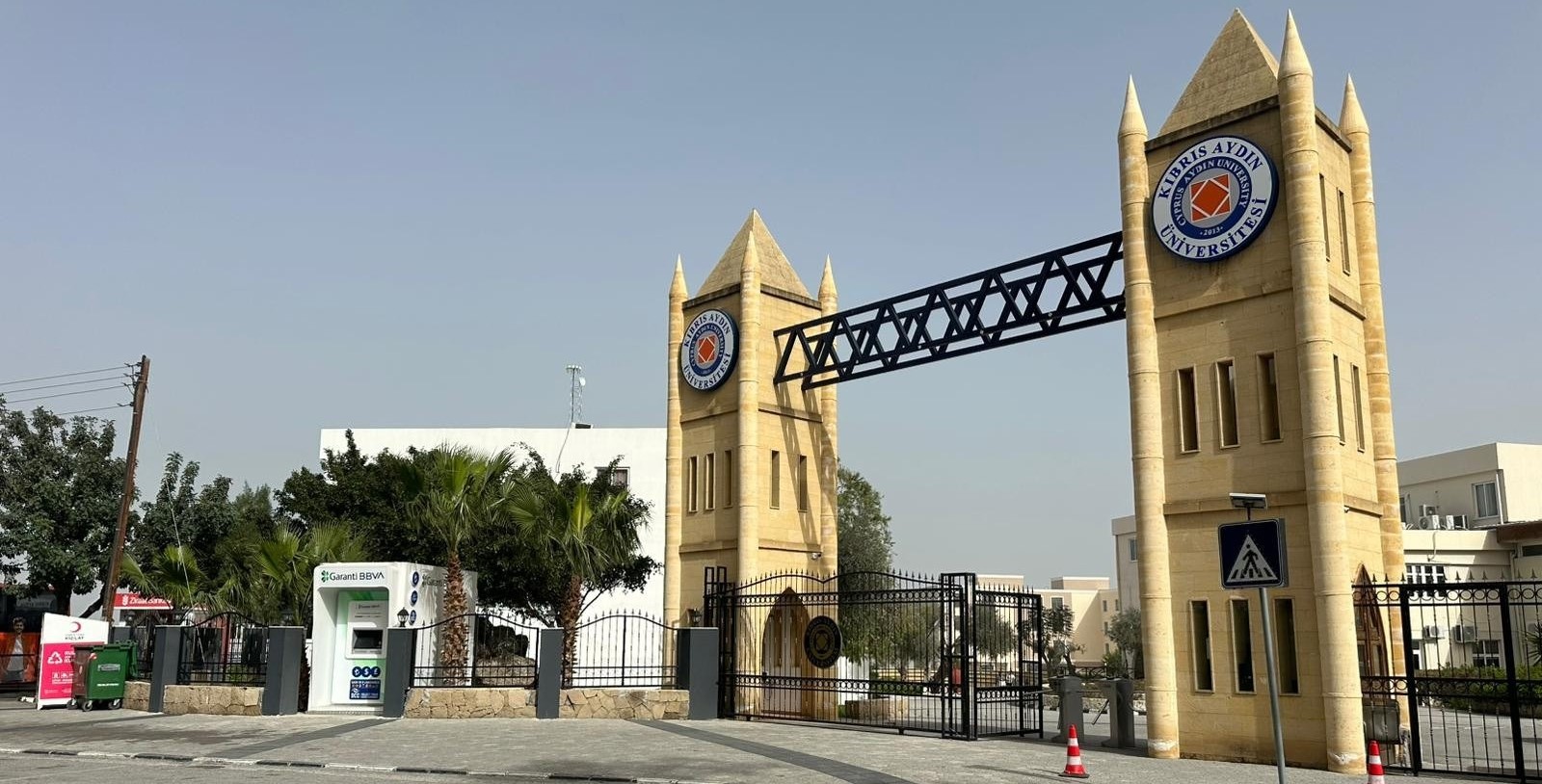
Adres: Dr. Fazıl Küçük Caddesi No.80 Ozanköy/Girne Kuzey Kıbrıs
Dean E-mail: [email protected]
Vice Dean E-Mail: [email protected]
Tel: +90 392 650 00 00
Instagram: caucampus
Instagram: cauint
Facebook: Cyprus Aydın