

document.addEventListener("DOMContentLoaded", function () { let limit = window.innerWidth <= 992 ? 6 : 5; const cards = document.querySelectorAll('.custom-menu-item.link-card'); const toggleBtn = document.getElementById('toggleBtn'); const toggleText = document.getElementById('toggleText'); const toggleIcon = document.getElementById('toggleIcon'); let isExpanded = false; const textExpand = "Tümünü Gör"; const textCollapse = "Daha Az Göster"; function initGrid() { limit = window.innerWidth { if (index >= limit) { card.classList.add('hidden-item'); card.classList.add('transparent-item'); card.classList.remove('visible-item'); } else { card.classList.remove('hidden-item'); card.classList.remove('transparent-item'); card.classList.add('visible-item'); } });
if (cards.length { if (index >= limit) { card.classList.remove('hidden-item'); setTimeout(() => { card.classList.remove('transparent-item'); card.classList.add('visible-item'); }, delay); delay += 20; } }); } else { toggleText.innerText = textExpand; toggleIcon.className = "fa-solid fa-chevron-down"; cards.forEach((card, index) => { if (index >= limit) { card.classList.remove('visible-item'); card.classList.add('transparent-item'); } }); setTimeout(() => { cards.forEach((card, index) => { if (index >= limit) { card.classList.add('hidden-item'); } }); }, 400); } });
initGrid(); window.addEventListener('resize', () => { if(!isExpanded) initGrid(); }); });
Aviation Management
The Department of Civil Aviation Management trains professionals to meet the management and leadership needs of the aviation sector.
Through mandatory internships, students combine theory with practice, ensuring they graduate fully prepared for the industry.
General Information
The Civil Aviation Management program at Cyprus Aydın University prepares students for management and leadership career paths across the aviation ecosystem, including airlines, airports, and aviation service organizations. The program is designed to combine a strong academic foundation with hands-on learning, supporting professional readiness in an industry defined by safety-critical operations, high service standards, and continuous regulatory oversight. Through a management-focused curriculum and structured practical opportunities, students develop sector-specific awareness alongside the transferable competencies expected in the aviation workplace.
h3>Message from the Program Director
Dear Prospective Students,
I am delighted to welcome you to the Civil Aviation Management program at Cyprus Aydın University. Aviation is a strategically vital sector that connects societies, enables global mobility, and strengthens international trade and tourism. However, it operates in an exceptionally complex environment characterized by strict regulatory oversight, uncompromising safety expectations, rapid technological change, and evolving market dynamics. These realities demand professionals who can combine sound managerial judgment with sector-specific expertise, ethical responsibility, and a commitment to continuous improvement.
Our program is structured to provide students with a rigorous academic foundation while developing practical competencies aligned with contemporary industry expectations. We embrace a student-centered learning philosophy that encourages active participation, critical inquiry, and professional responsibility. The curriculum is also guided by outcomes-based education, ensuring that learning experiences and assessments align with clearly defined graduate competencies—knowledge, skills, and professional behaviors—necessary for effective performance in aviation organizations.
A defining characteristic of aviation is its global regulatory environment, shaped by international and regional frameworks as well as best practices. Accordingly, our academic perspective informs students about the principles and professional culture that form the foundation of aviation governance and oversight, including national authorities in Turkey such as the International Civil Aviation Organization (ICAO), the European Union Aviation Safety Agency (EASA), and the General Directorate of Civil Aviation (SHGM)
, among others. This broad regulatory awareness helps students understand how aviation organizations operate within regulation-based systems where safety, security, quality, and operational continuity must be systematically managed.
Equally important is the development of a quality assurance culture, which is one of the cornerstones of sustainable performance in aviation. Our program emphasizes the mindset and practices that support quality and safety outcomes, such as standardization, accountability, documentation discipline, continuous monitoring, and a focus on corrective actions. Students are encouraged to appreciate how organizational culture, leadership behavior, and robust management systems influence real-world outcomes—ranging from service consistency and operational reliability to risk awareness and continuous improvement.
In addition to industry-specific knowledge, we prioritize the development of analytical and transferable skills. Modern aviation management relies on the ability to interpret complex operational challenges, evaluate alternatives using evidence-based reasoning, and communicate effectively within multicultural and multidisciplinary teams. Therefore, students engage with core themes such as organizational behavior and leadership, operational planning and coordination, service quality and customer experience, resource and performance management, and strategic decision-making in an aviation context. Through applied learning and structured professional placements, students are supported in translating theory into competence—preparing them for graduate education, professional certification pathways, and diverse careers across the aviation ecosystem.
Aviation continues to evolve through digitalization, data-driven decision-making, automation, and sustainability requirements. Therefore, our program encourages students to understand emerging trends and develop the qualities of resilience, adaptability, and innovative thinking that are increasingly valued in aviation organizations. Our overarching goal is to produce competent, responsible graduates with a global perspective—ready to contribute to safe, efficient, and customer-focused aviation operations.
On behalf of our faculty and academic community, I invite you to explore our program and join an educational environment that combines academic rigor, professional standards, and industry alignment. We look forward to supporting your development as an aviation professional ready to lead, collaborate, and succeed in a challenging global industry.
Sincerely,
Program Director, Civil Aviation Management – Cyprus Aydin University
Program Overview
The Civil Aviation Management program at Cyprus Aydin University is designed to provide a management-focused, rigorous education aligned with the operational realities and strategic requirements of the modern aviation industry. The program approaches aviation as an interconnected system comprising organizations, stakeholders, and processes, enabling students to gain a comprehensive understanding of how airlines, airports, and aviation service providers operate within a highly regulated, safety-critical environment.
The Civil Aviation Management program at Cyprus Aydın University is designed to provide a management-focused, rigorous education aligned with the operational realities and strategic requirements of the modern aviation industry. The program views aviation as an interconnected system comprising organizations, stakeholders, and processes, and enables students to comprehensively understand how airlines, airports, and aviation service providers operate within a highly regulated, safety-critical environment.
The curriculum is structured to establish a strong conceptual foundation and progressively build practical managerial competence. Students engage with topics such as management principles, organizational behavior, operational planning, service quality, and performance management—within aviation-specific contexts where reliability, time sensitivity, resource constraints, and the customer experience are inextricably intertwined with operational decision-making. This academic framework supports a systematic understanding of how operational processes and managerial decisions impact safety performance, service consistency, organizational resilience, and competitiveness.
A defining feature of aviation education is the necessity for regulatory and governance awareness. Accordingly, the program emphasizes the logic of regulation-based operations and introduces students to the global regulatory environment shaped by national authorities such as the International Civil Aviation Organization (ICAO), the European Union Aviation Safety Agency (EASA), and the General Directorate of Civil Aviation (SHGM). This perspective helps students understand how standards, oversight, and organizational accountability shape daily practices—from documentation discipline and procedural compliance to risk awareness and quality assurance.
In parallel, the program is guided by a student-centered learning philosophy and an outcomes-based educational approach; learning activities and assessments are explicitly aligned with clearly defined graduate competencies. Students are encouraged to develop competencies—such as analytical thinking, professional communication, ethical judgment, and evidence-based decision-making—that are essential for effective performance in multidisciplinary teams and complex operational environments. Through a culture of quality assurance, a mindset of continuous improvement, and an emphasis on professional responsibility, the program aims to graduate individuals prepared to make constructive contributions to aviation organizations and pursue diverse career paths within the broader aviation ecosystem.
Aims and Objectives
The Civil Aviation Management programme at Cyprus Aydın University aims to train the aviation professionals of the future who will be able to work effectively within the sector’s complex, safety-critical and internationally regulated environment. The programme is designed to provide students with a solid academic foundation in management and to situate managerial thinking within the context of aviation organisations, where operational continuity, safety performance, service quality and regulatory compliance must be addressed simultaneously. In this regard, the programme aims to produce graduates who demonstrate ethical responsibility, professional discipline and a global perspective—qualities that are fundamental to sustainable leadership and sound decision-making in aviation.
A core objective is to enable students to understand, evaluate, and improve aviation operations and organizational performance by developing their analytical capacity and evidence-based problem-solving skills. Therefore, the program emphasizes critical thinking, structured reasoning, and professional communication; it enables students to interpret operational and managerial challenges, evaluate alternatives, and justify their decisions using appropriate qualitative and quantitative information. This academic orientation is complemented by a commitment to student-centered learning and outcomes-based education; it ensures that learning experiences align with clearly defined graduate competencies and enables students to progressively develop transferable skills relevant to the aviation workplace.
The program’s objectives are to equip students with a comprehensive understanding of the structure and governance of the aviation industry; and to help them grasp how airlines, airports, and service providers interact within the global regulatory environment shaped by organizations and frameworks such as the International Civil Aviation Organization (ICAO), the European Union Aviation Safety Agency (EASA), and the General Directorate of Civil Aviation (SHGM). It enables students to gain industry-specific awareness of regulation-based operations and to understand how regulations, standards, and oversight influence organizational processes,
They are expected to understand how these factors influence documentation practices, accountability structures, and quality assurance mechanisms.
In addition, the program aims to develop managerial competencies in key aviation-related functional areas, including operational planning and coordination, performance and resource management, service quality and customer experience, as well as organizational behavior and leadership. By integrating a culture of quality assurance and a mindset of continuous improvement into the learning outcomes, the program prepares students to contribute to organizational effectiveness, support risk-informed decision-making, and participate in improving operational reliability and service consistency. Ultimately, the program’s goal is to produce individuals who are prepared for various entry-level professional career paths in aviation and possess the readiness for lifelong learning, professional development, and—where appropriate—academic preparation for advanced studies in aviation and related fields.
Accreditations
The Department of Aviation Management has been accredited by the Council of Higher Education (YÖK) and the Council for Higher Education Planning, Supervision, Accreditation and Coordination (YÖDAK), demonstrating our commitment to quality and educational standards. These accreditations ensure that our educational content meets national and international standards, that our academic staff are competent, and that the quality of the learning environment we provide for our students is guaranteed. Our university aims to provide students with a reliable, high-quality and reputable academic experience by keeping its teaching and learning activities up to date in line with a philosophy of continuous development.
Career Opportunities
Graduates in Aviation Management can pursue a variety of career paths across the aviation ecosystem, particularly in roles requiring coordination, regulatory awareness, a service-oriented approach and managerial competence. Common career paths include aviation management functions such as operational support, planning and coordination, customer experience and service quality, sales and distribution support, as well as administrative or planning roles. Graduates may also build careers in airport management and operations, including terminal operations, passenger services coordination, airport administration, safety and security coordination roles, and quality-focused operational support functions. Additional career paths may be found in ground handling and airport services, where operational coordination, resource planning and service delivery oversight are central.
Beyond passenger-focused environments, the programme supports employability in the fields of cargo and logistics, including documentation-based operations, cargo coordination and aviation supply chain support. Graduates can also develop their careers in aviation safety, quality and compliance-focused roles, as well as in cross-functional areas such as human resources, procurement, financial support and project coordination within aviation organisations,
provided they meet professional qualifications and employer requirements. Over time, with experience and professional development, graduates can progress to supervisory and managerial positions, as well as specialised career paths aligned with industry needs.
Programme Structure
- Programme Qualification Type
- Course Structure
- Course Contents, ECTS and Assessment
Course Contents, ECTS and Assessment
Learning and Assessment
Admission Requirements
Admission Requirements
Admission, Recognition and Transfers
Admission, Recognition and Transfers
Students
Students are involved in the process not only as learners but also as individuals who actively contribute to the development of the programme. The programme encourages participation through student representation mechanisms (e.g. class representatives and/or student councils), which provide a formal channel for communicating academic and administrative matters. In addition, the programme supports feedback mechanisms such as course and teaching staff evaluations, structured surveys, focus group-style meetings where necessary, and periodic review meetings aimed at capturing the student experience across learning, assessment and support services. Participation channels are designed to promote transparent communication, the timely resolution of issues, and the continuous improvement of teaching and learning practices.
Staff
Academic and administrative staff are key stakeholders in ensuring the sustainability of programme quality and the delivery of a consistent programme. Academic staff are responsible for the implementation of the curriculum, the alignment of learning outcomes, the integrity of assessment and evaluation, academic advising, and the maintenance of field standards, including the incorporation of current sectoral developments and professional expectations into the programme. Administrative staff, meanwhile, support student services, documentation processes, course scheduling and planning, the coordination of placements or fieldwork, and the operational continuity of programme activities. Together, they contribute to a consistent learning environment and support a culture of quality assurance through regular coordination, reporting and continuous professional development practices.
Alumni
Graduates represent a key stakeholder group whose professional experiences can inform the programme’s relevance and continuous improvement. The programme aims to maintain communication with graduates through appropriate channels (e.g. alumni networks, periodic communications and digital communication platforms) and encourages graduates to share feedback on the extent to which the programme’s competencies meet workplace expectations. Alumni feedback can support alumni tracking activities such as follow-up surveys, employability observations and career development insights, and contributes to the evidence-based evaluation of programme outcomes and the identification of curriculum development priorities.
Employers and Industry Stakeholders
Engagement with employers and industry stakeholders is fundamental to ensuring the curriculum remains up to date and to enhancing the employability of graduates. The programme promotes sectoral collaboration through structured partnerships with aviation organisations (e.g. airlines, airports, ground handling, cargo and logistics, aviation service companies); it supports opportunities for
learning activities such as work placements, practical learning, guest lectures and those supported by sectoral input. Where appropriate, advisory structures such as an Industry Advisory Board or Consultative Committee may be utilised to provide systematic input regarding competence requirements, emerging sectoral trends and expectations regarding professional readiness. These partnerships help ensure the programme remains aligned with the wider aviation ecosystem and support students’ effective transition from academic learning to professional practice.
Infrastructure and Physical Facilities
The Department of Aviation Management possesses a robust physical and technical infrastructure designed to provide its students with a modern and practice-oriented learning environment. Lectures are conducted in smart classrooms and lecture theatres equipped with state-of-the-art technology; interactive and participatory learning is supported by projection systems, smart podiums and audiovisual equipment. The teaching spaces are designed to facilitate both theoretical instruction and presentation, discussion and project-based work.
The Department houses computer laboratories that support practical training in the fields of economics, finance and business administration. Students can carry out practical work in these laboratories using statistical analysis and financial modelling software. Computer laboratories available for shared use across the university also support educational and research activities.
This comprehensive infrastructure and physical facilities reinforce the faculty’s practice-oriented approach to education and contribute to the development of students’ professional competencies.

No posts found.
Events
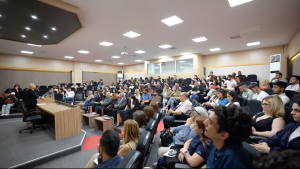
The Department of Aviation Management aims to organise academic and practice-oriented activities that support students’ academic development. Within this framework, the department plans to organise conferences, panels, seminars and student-centred academic events.
Supported by contributions from academics, diplomats, policymakers and industry professionals, these planned activities aim to develop students’ critical thinking, analytical and debating skills. Furthermore, it is planned that these events, which aim to strengthen students’ academic and professional awareness, will be conducted from an interdisciplinary perspective.
Through its future activities, the Department of Banking and Finance aims to enrich students’ educational experience by prioritising the creation of high-quality, up-to-date academic environments that bridge theory and practice.
News and Announcements
Students in the Department of Aviation Management at Cyprus Aydın University can view announcements made via our university’s educational information portal (EBS). Upon registration, each student is provided with a student email account with the cau.edu.tr domain, and these accounts are actively used. In addition, announcements are sent instantly via WhatsApp class groups to ensure students can be reached quickly through their student representatives.
Contact Information
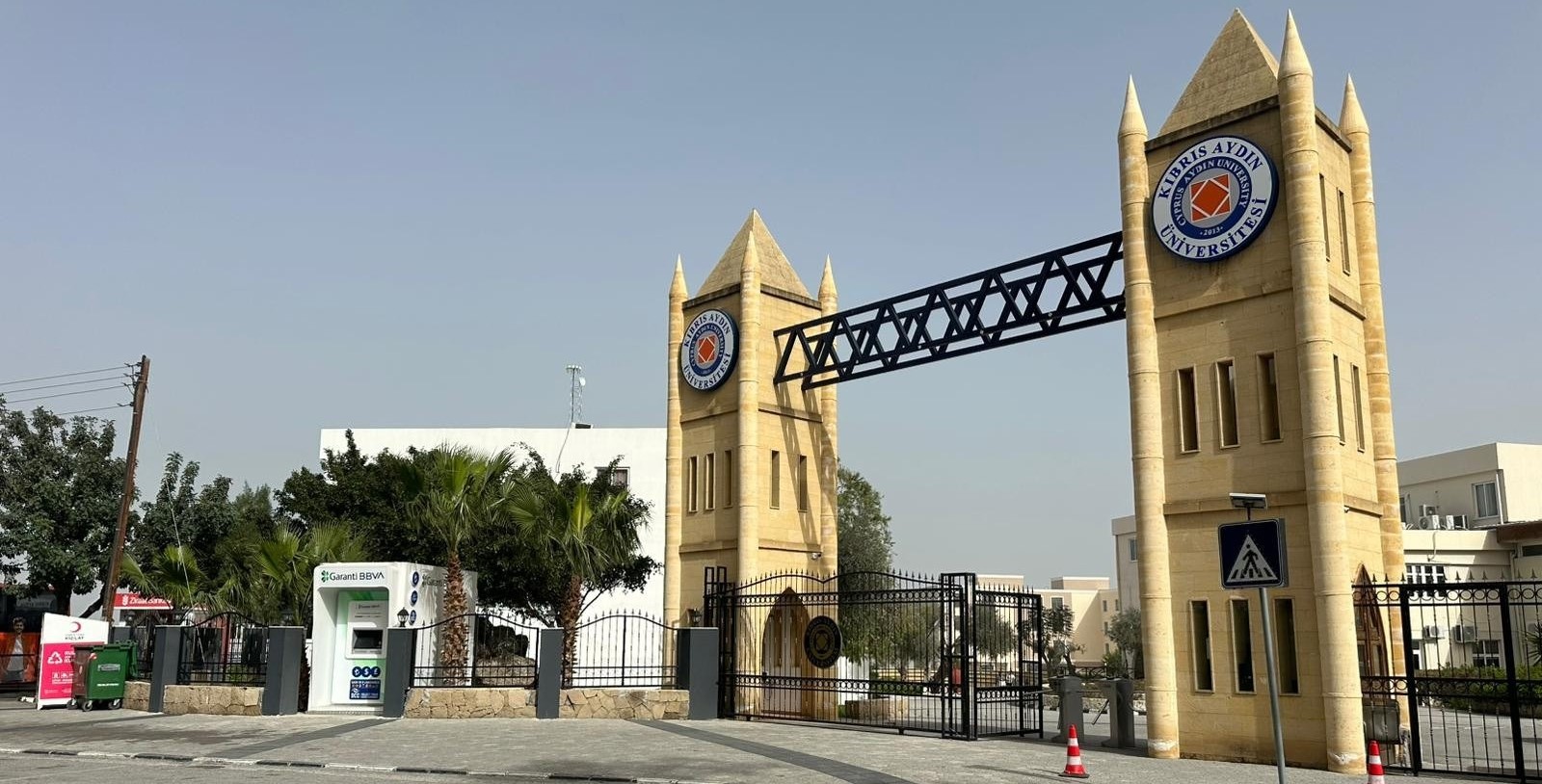
Address: Dr. Fazıl Küçük Caddesi No.80 Ozanköy/Girne Kuzey Kıbrıs
Dean E-mail: [email protected]
Vice Dean E-Mail: [email protected]
Vice Dean E-Mail: [email protected]
Tel: +90 392 650 00 00
Instagram: caucampus
Instagram: cauint
Facebook: Cyprus Aydın University