

Tourist Guidance
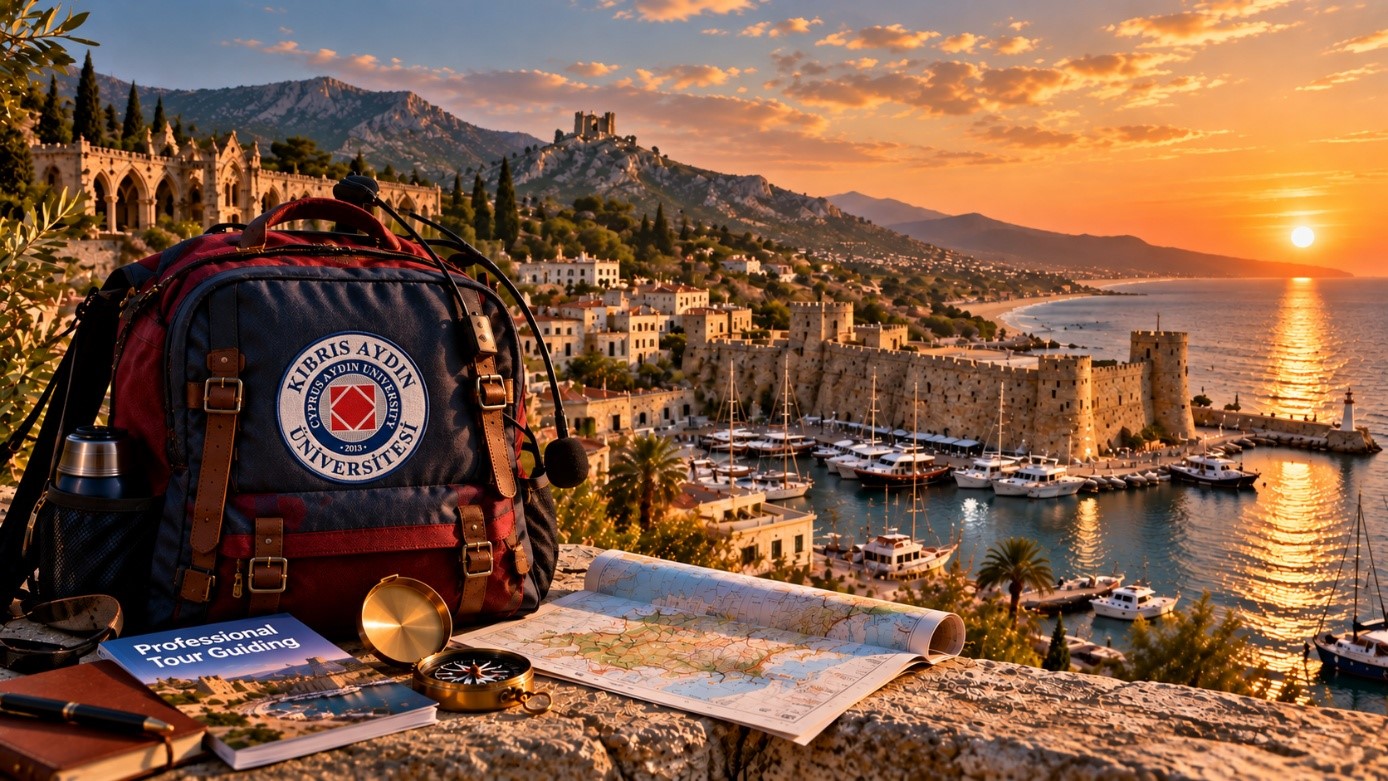
The Tourist Guiding Program at Cyprus Aydin University is a two-year Associate Degree program offered in English within the Vocational School. The program provides students with education in areas including professional tourist guiding, tourism geography, art history, world civilizations, cultural heritage, tour planning, communication, tourism marketing, and vocational foreign language. In addition to theoretical instruction, field studies and practice-based activities are designed to enable students to experience Cyprus’s rich historical, cultural, and natural heritage first-hand and to acquire the knowledge and professional guiding skills required to interpret different destinations.
General Information
The Tourist Guiding Program, offered within the Vocational School of Cyprus Aydin University, aims to educate qualified individuals who contribute to the promotion and preservation of cultural and natural heritage, embrace the principles of sustainable tourism, and possess the professional knowledge and skills required in the field.
Our program offers education at Associate Degree level with the aim of contributing to the development of the qualified human resources required by the tourism sector.
The normal duration of the program, for which the medium of instruction is English, is two years, and the program is completed over four academic semesters. English preparatory education is provided in accordance with students’ language proficiency levels and the relevant regulations of the University.
Tourist guiding is a professional field directly associated not only with the tourism sector but also with a range of disciplines, including history, geography, archaeology, art history, cultural heritage, sociology, and communication. Within this framework, our program aims to enable students to evaluate knowledge acquired from different disciplines through an integrated approach and apply it to professional practice.
Cyprus’s multi-layered historical background, cultural diversity, traditional ways of life, gastronomic values, and natural environmental characteristics constitute important elements that support the program’s practice-oriented educational approach.
Message from the Head of Department
Dear Students, Prospective Students, and Esteemed Stakeholders of the Tourism Sector,
Tourist guiding is an important profession that goes beyond communicating the history, culture, geography, and way of life of a destination to visitors; it also facilitates intercultural communication and contributes to the preservation of cultural heritage. Today, tourist guides assume significant responsibilities in the accurate promotion of destinations and in advancing the principles of sustainable tourism.
As the Tourist Guiding Department of Cyprus Aydin University, our primary objective is to educate tourist guides who are capable of presenting the cultural, historical, and natural assets of Cyprus and the wider world accurately, effectively, and responsibly; who possess strong professional knowledge and skills, a high level of foreign-language proficiency, well-developed communication skills, and the ability to adapt to contemporary requirements.
Our educational approach is based not only on the transmission of theoretical knowledge but also on enabling our students to apply what they have learned and experience the profession in the field. Accordingly, our priorities include enabling our students to:
· Develop a strong knowledge base in history, geography, art history, archaeology, cultural heritage, and tourism,
· Develop the presentation, communication, group management, and problem-solving skills required by the tourist guiding profession,
· Use their foreign-language skills effectively at a professional level,
· Gain professional experience through field studies, educational excursions, and cooperation with the tourism sector,
· Use digital technologies and contemporary tourism applications effectively,
· Develop as responsible individuals who adhere to professional ethics and respect cultural differences.
Cyprus’s historical background, multicultural structure, archaeological heritage, traditional way of life, gastronomic values, coastlines, and natural attractions provide an important learning and practice environment for our students. We therefore attach importance to enabling our students to learn and gain professional experience not only in the classroom but also within the island’s rich heritage environment.
Throughout this learning journey extending from Cyprus to the wider world, we aim to support our students in developing through knowledge, strengthening their professional competencies through practice and experience, and establishing themselves effectively within the sector as the tourism professionals of the future.
I wish all our students a successful and productive educational experience that supports their academic, professional, and personal development, and I hope that, in cooperation with representatives and stakeholders of the tourism sector, we will contribute to a strong future for tourism based on sustainability, quality, and contemporary standards.
Program Introduction
Mission
The mission of the Tourist Guiding Programme is to educate qualified individuals who are capable of evaluating historical, cultural, and natural heritage through a scientific approach; communicating the knowledge they acquire effectively through strong communication and presentation skills; demonstrating foreign-language proficiency; adhering to professional ethical principles; and embracing the principles of sustainable tourism.
In line with an educational approach that integrates theoretical knowledge with practice, our programme places particular emphasis on developing students’ critical thinking, problem-solving, research, interpretation, and professional decision-making skills.
Vision
The vision of the Tourist Guiding Programme is to become an innovative, preferred, and recognised Associate Degree programme that serves as a reference in its field by providing high-quality education in English, adopting a teaching approach based on scientific knowledge, and integrating practice with contemporary educational principles; responding effectively to the changing needs of the national and international tourism sector; and contributing to the preservation and promotion of cultural and natural heritage and to the development of sustainable tourism.
Aims and Objectives
The primary aim of the Tourist Guiding Program is to enable students to acquire the theoretical knowledge they will require in the fields of tourism and tourist guiding and to apply this knowledge in professional practice.
In line with this primary aim, our programme seeks to:
1. Develop students’ knowledge of history, geography, art history, archaeology, mythology, and cultural heritage,
2. Teach the fundamental concepts, professional responsibilities, and ethical principles associated with the tourist guiding profession,
3. Provide students with knowledge of the structure, operation, and current developments of the tourism sector,
4. Develop students’ English-language communication and professional presentation skills,
5. Raise awareness of the preservation of cultural and natural heritage,
6. Develop professional competencies in tour planning, route development, group management, and visitor experience,
7. Increase knowledge and awareness of alternative forms of tourism and sustainable tourism practices,
8. Develop students’ research, analysis, critical thinking, and problem-solving skills,
9. Support the professional use of digital technologies and contemporary tourism applications,
10. Educate graduates who are capable of communicating effectively with individuals from different cultures, possess a strong sense of social responsibility, and embrace lifelong learning.
Accreditation
Career Opportunities
Graduates of the Tourist Guiding Programme may find employment in various areas of the tourism sector in accordance with the professional knowledge and skills they have acquired.
Potential fields of employment include travel agencies, tour operators, accommodation establishments, cruise tourism, cultural and tourism organisations, destination management, tour organisation, event management, and tourism consultancy.
Graduates wishing to work as professional tourist guides must satisfy the requirements stipulated by the relevant legislation of the country in which they intend to practise, including requirements relating to admission to the profession, recognition of qualifications, language proficiency, and other applicable conditions. An Associate Degree diploma alone does not constitute a professional licence or professional identification card.
Program Qualification Type
Learning and Assessment
Admission Requirements
Cyprus Aydın University admits Turkish citizens who have graduated from high school or equivalent schools through the centralized entrance exam administered by the Student Selection and Placement Center (ÖSYM).
International students who have graduated from high school or equivalent schools are eligible to apply directly to KAUN provided they meet the admission criteria. Admission criteria include scores from internationally recognized exams (e.g., SAT, GCE, IB) or university entrance exams in certain countries.
For detailed information on the application and admission process for undergraduate programs, please visit the website provided in the relevant links.
Admission, Recognition and Transfers
Students from Turkey enroll at our university based on the scores they achieve on exams administered centrally by the ÖSYM; students holding TRNC citizenship enroll through the Scholarship and Transfer Exam conducted by the university, while prospective students from third countries may enroll in accordance with the regulations of the TRNC, the Ministry of National Education (MEB), and YÖDAK. For transfers from other higher education institutions to our university, as well as applications for dual majors and minors, enrollment is processed in accordance with the regulations approved by the University Senate.
Students
Students are the programme’s principal internal stakeholders in teaching and learning and quality enhancement processes.
Students’ academic and professional development is supported through academic advising services, practice-based courses, field studies, and career development activities.
Students may communicate their views and suggestions to the relevant academic and administrative units through the University’s student representation system and feedback mechanisms.
Employees
Academic and administrative staff contribute to the delivery of the programme’s teaching and learning activities and its institutional development processes.
Evaluations conducted with the participation of academic staff address the currency of course content, learning outcomes, assessment and evaluation methods, and students’ professional development needs.
Coordination is maintained among the relevant academic and administrative units in the planning and implementation of the programme’s teaching and learning activities.
Graduates
Programme graduates constitute an important stakeholder group in evaluating the professional outcomes of teaching and learning activities.
Graduates’ professional experiences, career development, and views regarding the changing needs of the sector are regarded as valuable sources of feedback for the continued development of the programme.
The University’s alumni and career support units conduct activities aimed at maintaining communication with graduates and supporting their career development.
Employers and Sectoral Stakeholders
The Tourist Guiding Programme attaches importance to establishing a strong relationship between the changing needs of the tourism sector and teaching and learning activities.
Travel agencies, tour operators, tourism businesses, professional organisations, local authorities, and organisations operating in the field of cultural heritage constitute potential external stakeholders of the programme.
Within the scope of sectoral engagement, the programme aims to develop professional seminars, practice-based training activities, field visits, meetings with experts, and collaborative projects.
Through these activities, the programme seeks to enhance students’ professional awareness and align educational processes with current sectoral needs.
Infrastructure & Physical Facilities
The Tourist Guiding Programme of the Vocational School at Cyprus Aydin University benefits from educational facilities that support students in integrating theoretical knowledge with professional practice.
Classrooms and Educational Technologies
The classrooms used within the programme are supported by visual and audio educational materials, maps, and presentation technologies.
These facilities enable students to evaluate information relating to historical and cultural sites through visual materials, develop their professional presentation skills, and participate in interactive learning activities during classes.
Library and Information Resources
Students may use the University’s library and information centre facilities to conduct academic research and pursue independent learning activities.
Library services support students in accessing scientific information in tourism, history, geography, art history, cultural heritage, and related disciplines.
Field-Based Learning
Cyprus’s historical settlements, archaeological sites, museums, natural environmental features, and cultural landscapes provide important field-based learning opportunities for students of the Tourist Guiding Programme.
Field studies and technical visits conducted within appropriate courses support students in developing their theoretical knowledge through on-site observation and evaluation.
The field-based learning approach aims to develop students’ destination knowledge, cultural heritage awareness, professional presentation skills, and tour-planning competencies.
Student Support Facilities
Students may benefit from the University’s academic advising, library, career development, and other student support services.
These services aim to support students’ academic achievement, professional development, and adaptation to university life.
Events
The Tourist Guiding Programme attaches importance to integrating teaching and learning activities with a range of academic, cultural, and professional activities in order to support students’ academic and professional development.
Programme activities include technical visits, field studies, cultural heritage studies, professional seminars, meetings with representatives of the tourism sector, and academic activities involving student participation.
Academic and Professional Activities
Academic and professional activities aim to enable students to follow current developments in the field of tourist guiding and to enhance their professional knowledge.
Technical Visits and Field Studies
Technical visits and field studies enable students to evaluate the knowledge they acquire in the classroom within actual tourism destinations.
Through these activities, the programme aims to develop students’ observation, research, interpretation, route-planning, and professional presentation skills.
Sectoral Activities
Meetings and seminars to be organised with representatives of the tourism sector are intended to help students become familiar with professional practices and evaluate the current needs of the tourism industry.
Detailed information regarding activities organised within the programme is shared through the programme’s events calendar and post-event news.
News & Announcements
Academic, administrative, scientific, and social developments relating to the Tourist Guiding Programme are announced through this section.
Up-to-date information concerning the academic calendar, course and examination schedules, academic activities, technical visits, sectoral meetings, and matters affecting students’ academic development is shared regularly.
Students are expected to follow official announcements relating to academic processes and to access current information through the University’s relevant information systems.
Contact Information
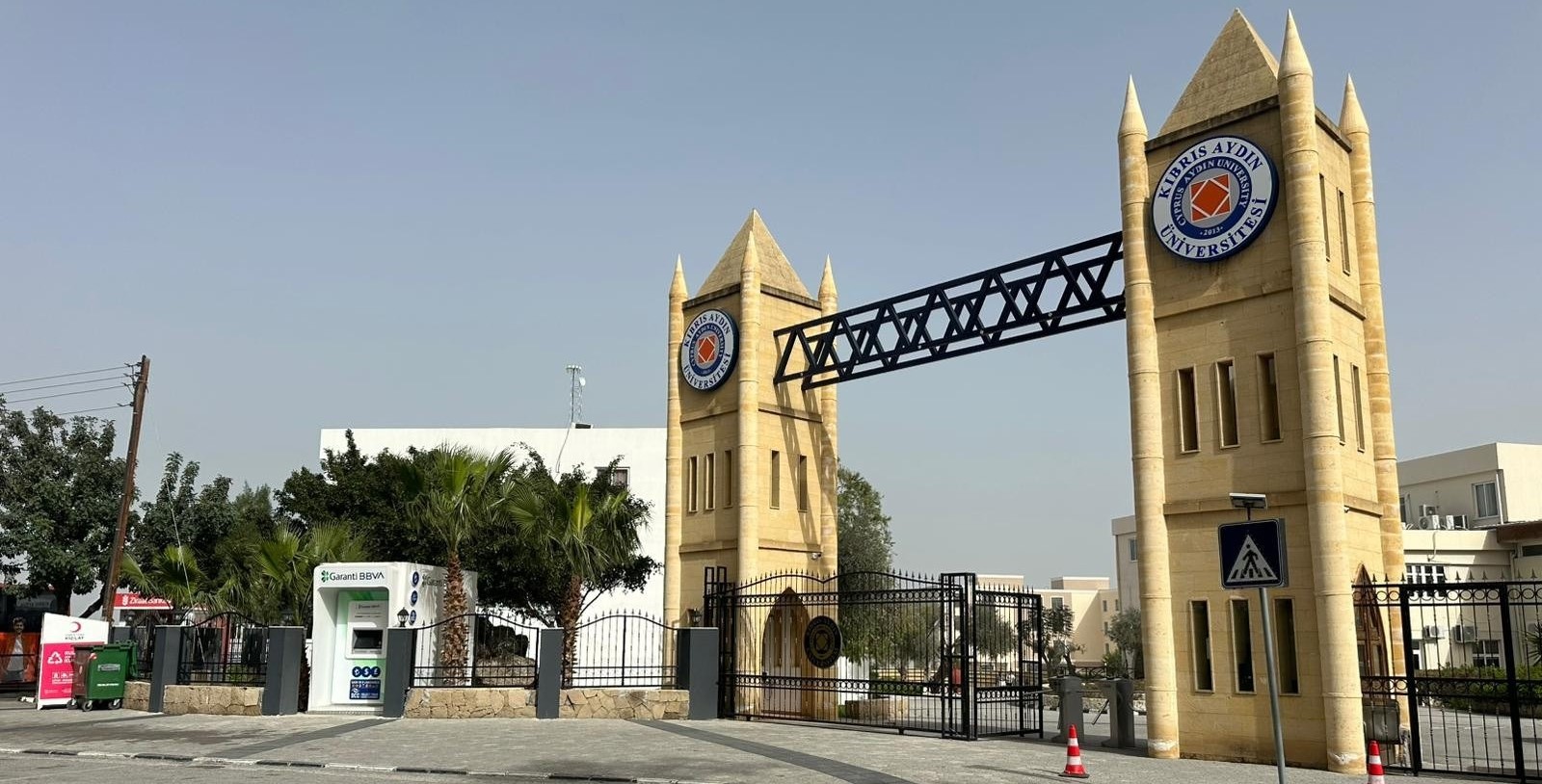
Adres: Dr Fazıl Küçük Avenue, No. 80, Ozanköy, Kyrenia, Northern Cyprus
Dekan E-mail:
Dekan Yardımcısı E-Mail:
Tel: +90 392 650 00 00
İnstagram: caucampus
İnstagram: cauint
Facebook: Cyprus Aydın University